Wednesday, November 4, 2020

Earthquake Proof Bridge

Tuesday, September 22, 2020

Title: The Use of Fibre Reinforced Concrete (FRC) in Precast Segmental Tunnel Linings in Asia Speaker: Mr. C. C. Gan, Bekaert Singapore

IOM3-HK Technical Seminar 26 Aug 2020  


About the Speaker: 

Mr. Gan 

graduated from The University of Singapore in 1989 and has worked in the construction industry for 31 years. 

He is working for Bekaert Singapore as Technical Manager since 1998. 

He has been involved in many prestigious underground projects and construction projects around Asia: including Qinling Railway & Highway Tunnel Xian, China; Mandai Underground Cavern Singapore, BMW Shenyang, China, Daimler Chrysler Beijing, China, Busan International Exhibition & Convention Center, South Korea and Jurong Rock Cavern Singapore. 

He has been involved in over 20 projects featuring fibre reinforced sprayed concrete linings and over 15 projects featuring fibre reinforced concrete precast segmental tunnel linings. 

Since Jan 2019, he was one of the members of the working group drafting the Singapore Standard on Design of Fibre Concrete Structures. In Mar 2019, he was appointed as the Domain Expert for Sprayed Concrete and in Jan 2020, he was appointed as Domain Expert for Fibre Reinforced Concrete under iNPQS (Intelligent National Productivity and Quality Specifications Singapore). 


Abstract: FRC has been used in precast segmental tunnel linings in Asia since 2005 beginning with Singapore in temporary segments.

 In 2012, the first permanent use of FRC in precast segmental tunnel linings finally began with Contract 933 in the Downtown Line Phase 3 in Singapore. 

Since then, FRC in precast segmental tunnel linings has been used for projects in Malaysia, Hong Kong, Japan and Singapore

. The number of projects adopting FRC in precast segmental tunnel linings are growing. 

This talk will discuss four topics related to the use of FRC in precast segmental tunnel linings.

 The topics are: 

1. Application of FRC 

2. QA/QC of FRC 

3. Design of FRC

 4. Durability of FRC

Monday, September 14, 2020

Monday, August 24, 2020

Merdeka Tower

Saturday, August 8, 2020

pavement design

 https://civilmdc.com/2020/03/09/principles-of-pavement-design-2nd-ed-e-j-yoder-m-w-witczak/
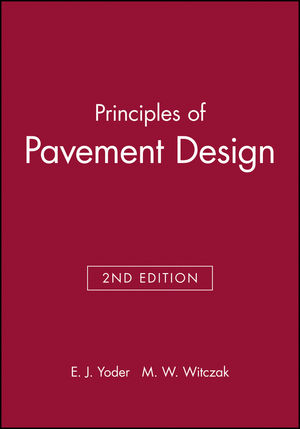

Presents a complete coverage of all aspects of the theory and practice of pavement design including the latest concepts.Content: Chapter 1 Pavement Types, Wheel Loads, and Design Factors (pages 1–23): Chapter 2 Stresses in Flexible Pavements (pages 24–80): Chapter 3 Stresses in Rigid Pavements (pages 81–127): Chapter 4 Vehicle and Traffic Consideration (pages 128–176): Chapter 5 Climate, Environment (pages 177–194): Chapter 6 The Economic Factor, Design Strategies, Systems Analysis (pages 195–220): Chapter 7 Soil Classification (pages 221–242): Chapter 8 Materials Characterization (pages 243–299): Chapter 9 Soil and Base Stabilization (pages 300–324): Chapter 10 Subgrades (pages 325–355): Chapter 11 Bases and Subbases (pages 356–383): Chapter 12 Bituminuous Surfaces (pages 384–404): Chapter 13 Material Variability (pages 405–444): Chapter 14 Design of Flexible Airport Pavements (pages 445–503): Chapter 15 Design of Flexible Highway Pavements (pages 504–555): Chapter 16 Design of Rigid Airport Pavements (pages 557–595): Chapter 17 Design of Rigid Highway Pavements (pages 596–624): Chapter 18 Pavement Distress (pages 625–645): Chapter 19 Condition Surveys (pages 646–664): Chapter 20 Strengthening Existing Pavements (pages 665–697):